Your phone is the most advanced piece of technology you own, and it can’t get through two days on its own. Some phones last a day. Some last a few hours. Same technology, different rates.
People work the same way.
My life runs on short obsessions. Chess for a while, then Duolingo streaks, then rock climbing, then calisthenics. I’ve stayed up all night on a certification I only found out about that morning. Desire is great at starting things. But every time I wanted a change that lasted, desire didn’t cut it. When the excitement faded or the energy dropped, I was right back where I started. When you’re excited, you go to the gym. When you’re tired, you stay home. With desire alone, your moods decide.
Willpower is the charger
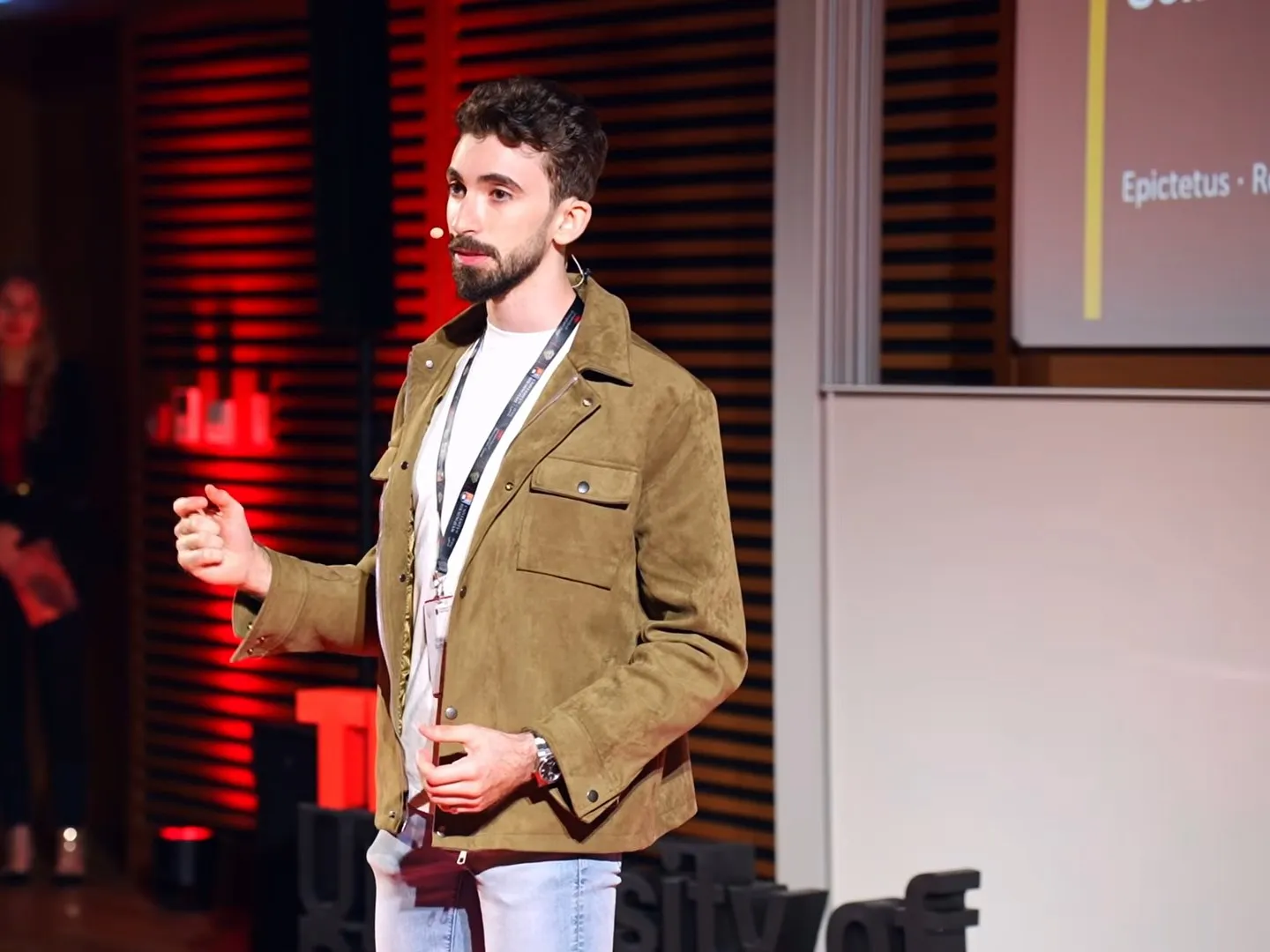
This is the picture I used on the TEDx stage in July. Desire is the battery. Willpower is the charger. And a charger on its own does nothing. It needs electricity behind it.
Electricity is whatever refills you when you’re on low power mode. For most people it has always been the same few things: family and friends, faith, purpose. Things and people bigger than you. Then there’s everything that drains the battery and gives nothing back: social media, advertising, certain people. These things want your time, your attention, and your emotions, and they don’t have your best interest at heart. You know what yours are.
The part I cut from the talk sits right here. I wanted to narrow down what actually counts as electricity, because a lot of what people believe charges them doesn’t hold up when you examine it with logic. It’s simple, it’s exciting, and you walk away drained. I didn’t have the time to do that properly on stage. But the question at the end of this post is a good test for it.
We can’t get rid of the internet. Epictetus dealt with a version of this problem two thousand years ago. Some things are in our control and some aren’t, and if you want to move forward, you put your effort into the first kind. You can’t choose everything that drains you. You can choose what you plug into.
Viktor Frankl survived the Nazi concentration camps after losing his wife, his brother, and his parents. He noticed that the survivors weren’t the strongest, the angriest, or the most stubborn. They were the ones who had something to live for. He quotes Nietzsche on it: “He who has a why to live for can bear almost any how.” He also flips the question most of us ask. We ask life what our purpose is. Frankl says life is asking us. The way I read that, it’s asking about your life task: the hard thing you keep putting off, the one you resist the most.
And James Clear makes the point that real habit change is identity change. When you take on your life task, it changes who you are. You end up accountable to something bigger than yourself, and that is the electricity.
In the talk I told two stories of what this looks like at the extreme. Nick Watson ran races with his son Rio on his back. Desmond Doss carried 75 wounded soldiers off Hacksaw Ridge in one night. They’re worth the 16 minutes.
4 a.m.
My life still has plenty of short obsessions. But every morning at 4 a.m., I get up for Fajr, the first of the five daily prayers in Islam. It is hard to get up for when you haven’t slept properly. I’ve had months where my sleep was wrecked and I turned into a much lazier version of myself.
I still get up every day. Not because it’s glamorous, and not because it’s easy, but because it’s something I’m answerable to. And it’s not because I’ve figured any of this out. It’s because I’m being pulled toward a version of myself I haven’t fully met yet.
The question
After the talk, a lot of people told me the closing question stuck with them. They sat with it, and it haunted them. Once they tackled it, it helped them move forward. I’ve since seen people send the talk to friends who seem confused or unmotivated, and it works, because it makes them rethink how their life is running.
We’ve all been sold the same story about change: try harder, work more, burn through everything you’ve got. The minute your energy runs out, that story has nothing left for you.
So the question isn’t whether you want it badly enough.
It’s what you’re accountable to on your worst day.